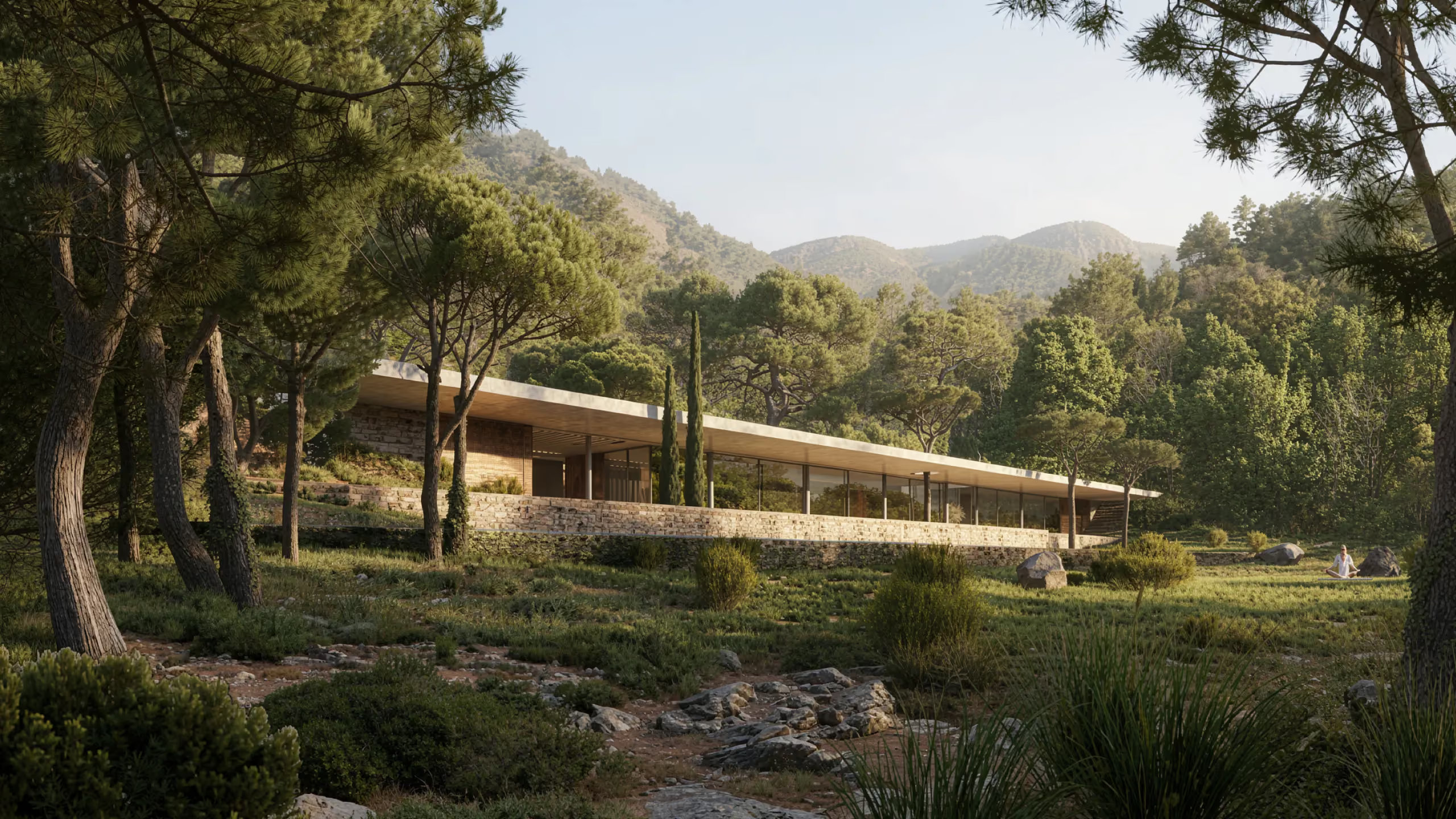
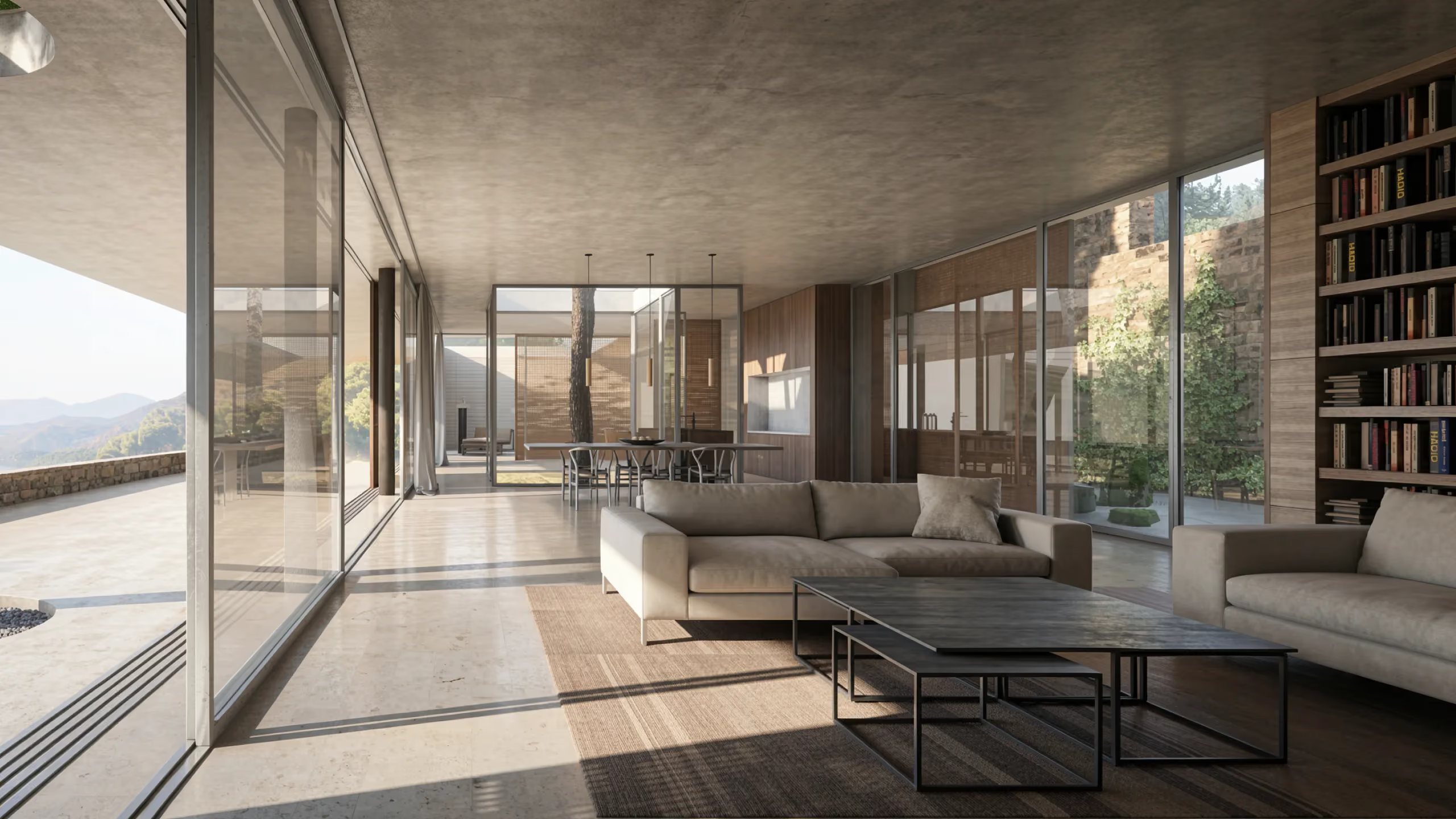
This subdued retreat, located on a forested hillside in southern Turkey sets out to take maximum advantage of its spectacular site facing the Bay of Göcek. Minimal intervention was required because for the owner, an interior architect with an extensive library to house, the building itself was almost less important than the place it occupies.
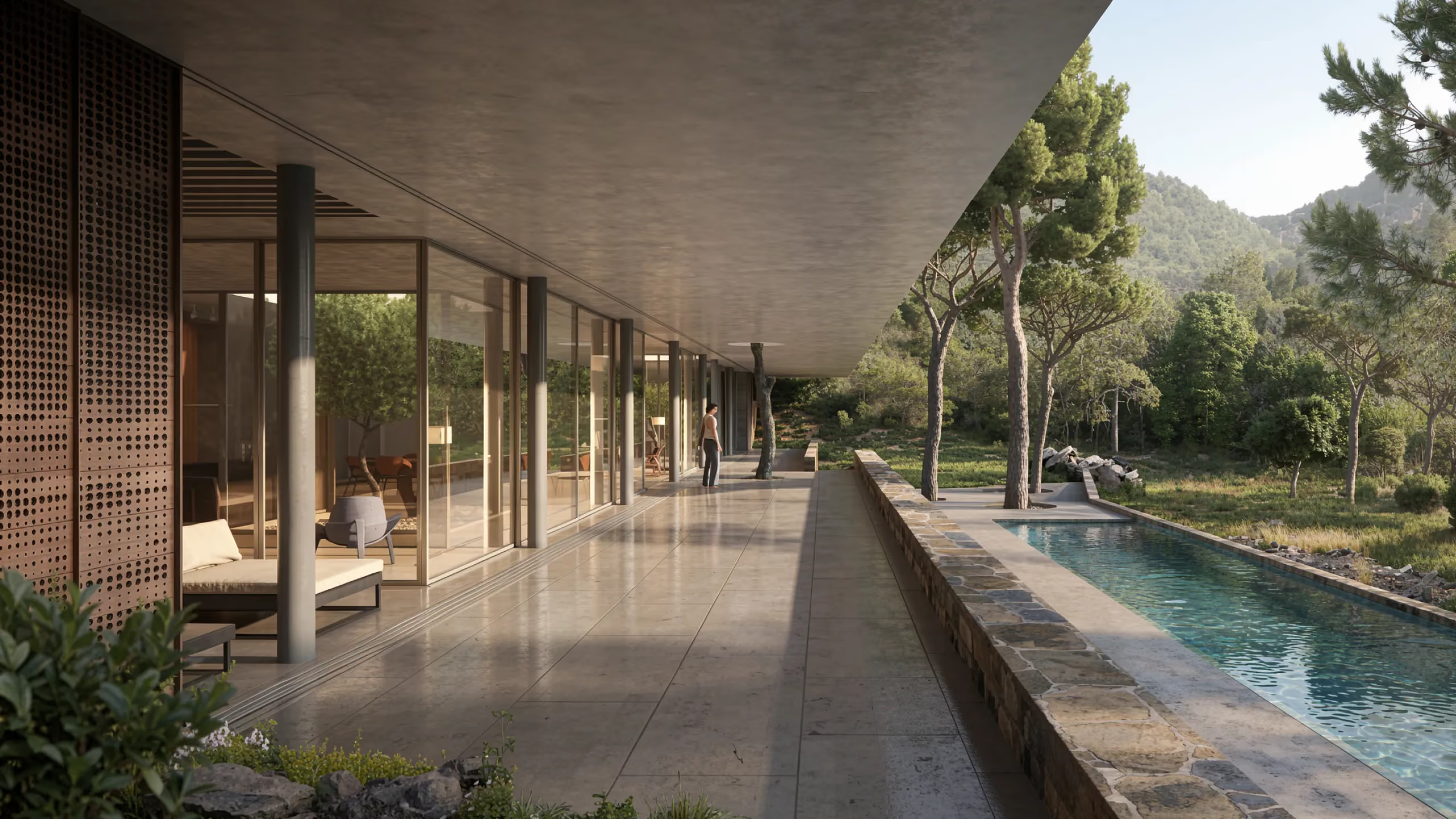
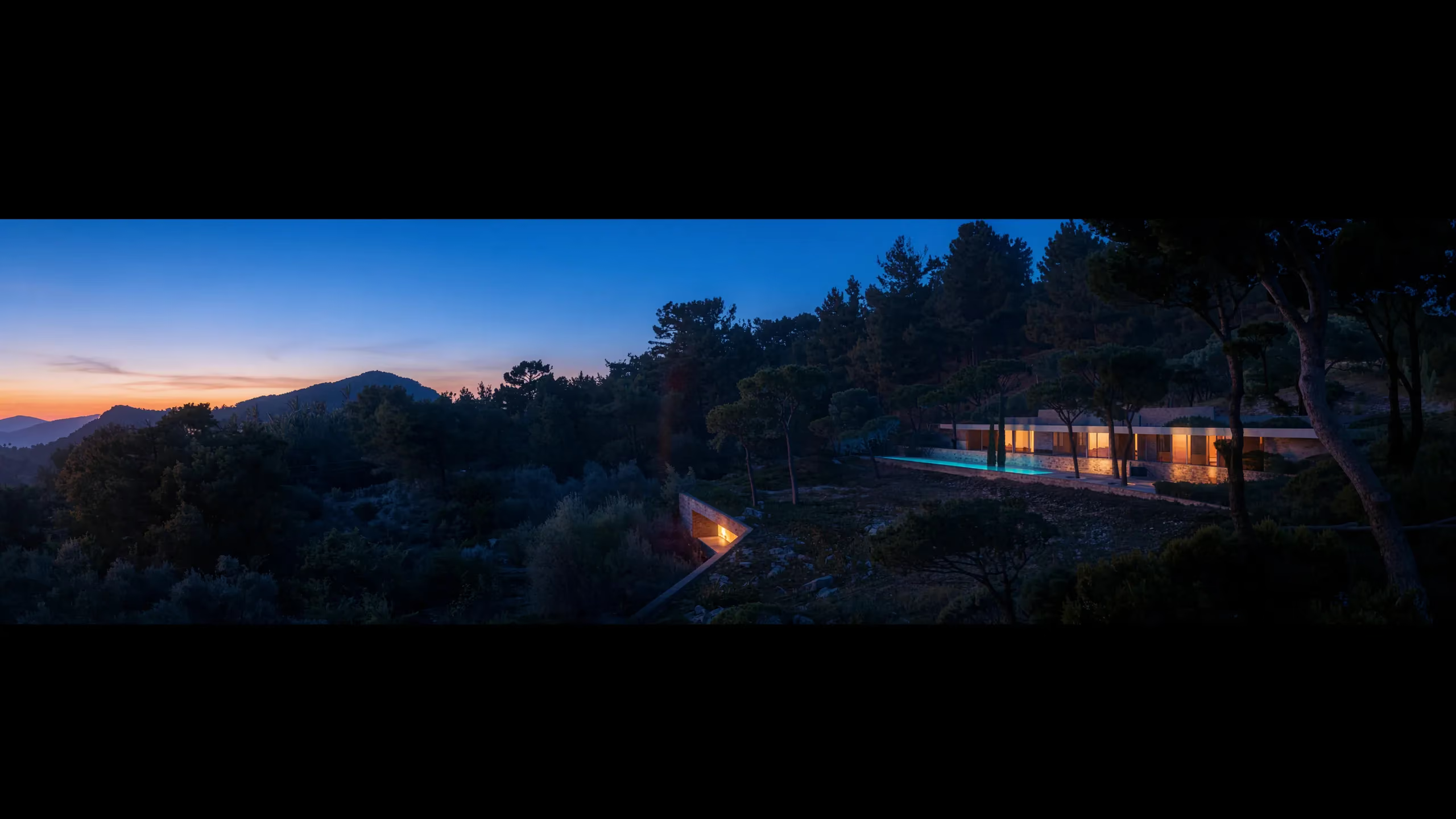
Composed of a simple bridging roof over a glazed horizontal enclosure with internal courtyards, it sits low on the landscape, atop a terrace-like stretch of natural vegetation that conceals a separate pool house and hammam. Sheltered under a single planted slab, punctuated with light wells through which all of the site’s existing trees emerge preserved, the lodge attempts to disappear into its surroundings. Built using local stone, it camouflages the most reflective feature, its glass walls, behind wooden screens that control light and temperature through a wave-like pattern of perforations derived from the nearby Aegean that was created by the artist Ana Corberó. More integrated components include the bio-pool and behind the lodge, a small Zen garden, which together with the concrete walls creates the impression that this is less house than a series of inhabited terraces designed to make the most of the view and eventually blend into the forest.